
Video recording for coding agents
Make your agent's work faster to review, and help your team digest what shipped, by turning coding sessions into video logs.
Get early accessHow it works
> ship the bulk export, film it, put it on the PR

● Built. Filming the run before I open the pull request.

● Bash(qa film localhost:3000 --brief "New: bulk export")
  ⎿  film    fj3k queued for localhost:3000
  ⎿  ready: app.questline.ai/watch/fj3k
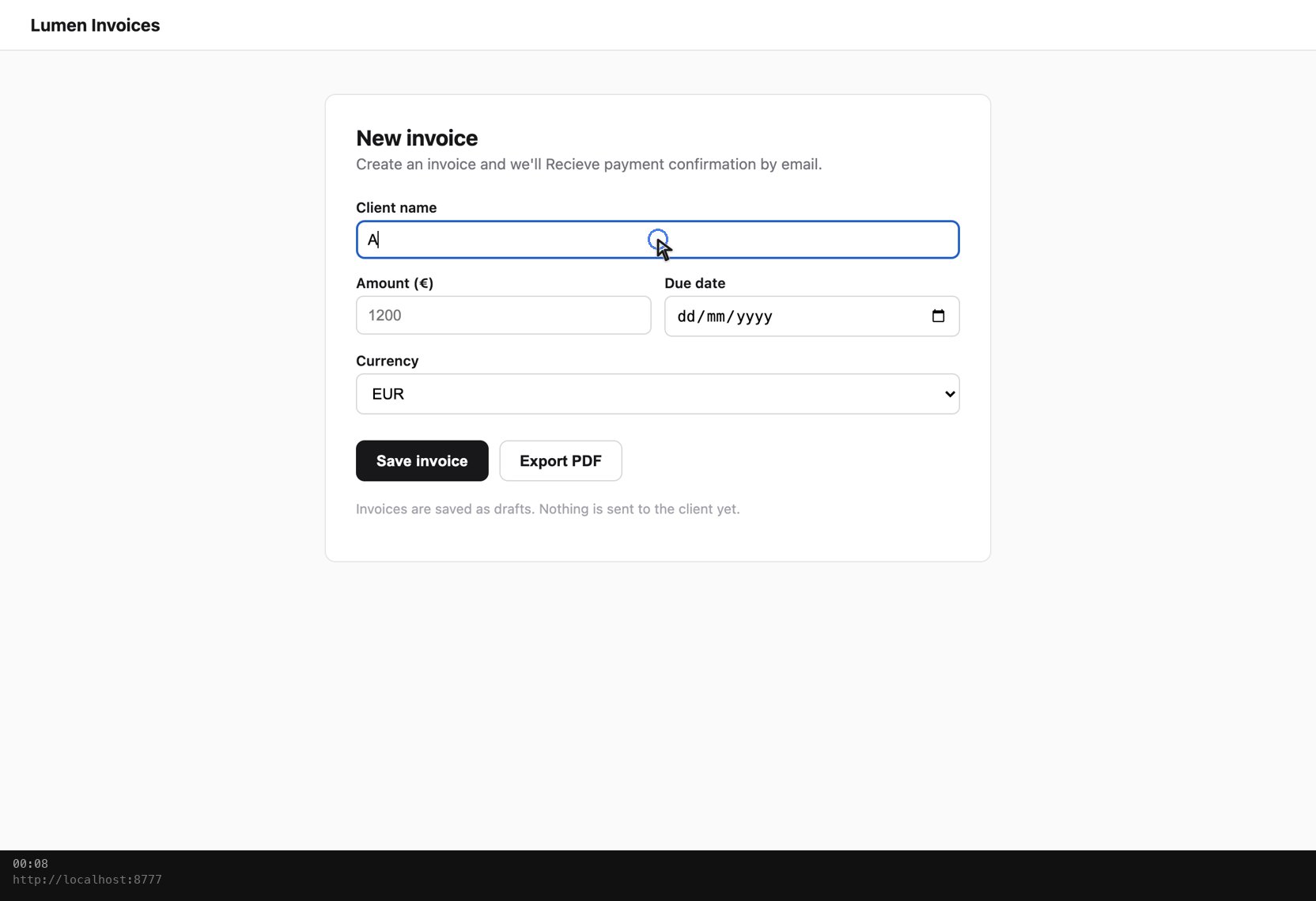 ▶︎ 0:24
- Your coding agent finishes a change and starts the recorder.
- The agent drives the app in a headless browser. No window opens, and nothing interrupts you.
- Our harness films from outside the agent. It records 2x frames, the input track, console events, and network events.
- The film goes to your chat or your pull request, so reviewers get the context fast.
Works with
Record from your coding platform
 Claude Code
 Codex
Codex
 Cursor
 pi
pi
Share where your team works
 GitHub
 Linear
Installing the recorder
curl -fsSL https://app.questline.ai/install.sh | sh
One command installs the qa tool in seconds. Your agent films any page the project runs, deployed or on localhost, and gets a link your workspace can open. Full instructions at app.questline.ai/install.
Built for teams shipping with agents

Builders
See every change your agent ships as a short film. QA it in minutes without leaving your editor.

Engineers
Each session is a video plus the console errors and failed requests behind the page.

Product
Run internal demos or a QA pass without a dev setup, and show your team the change you propose.

CTOs
Agent-heavy work stays reviewable as the volume grows, because every change arrives as a recording the team can watch.
Receive a video recap where you work
 questline commented on pull request #141
New: bulk export
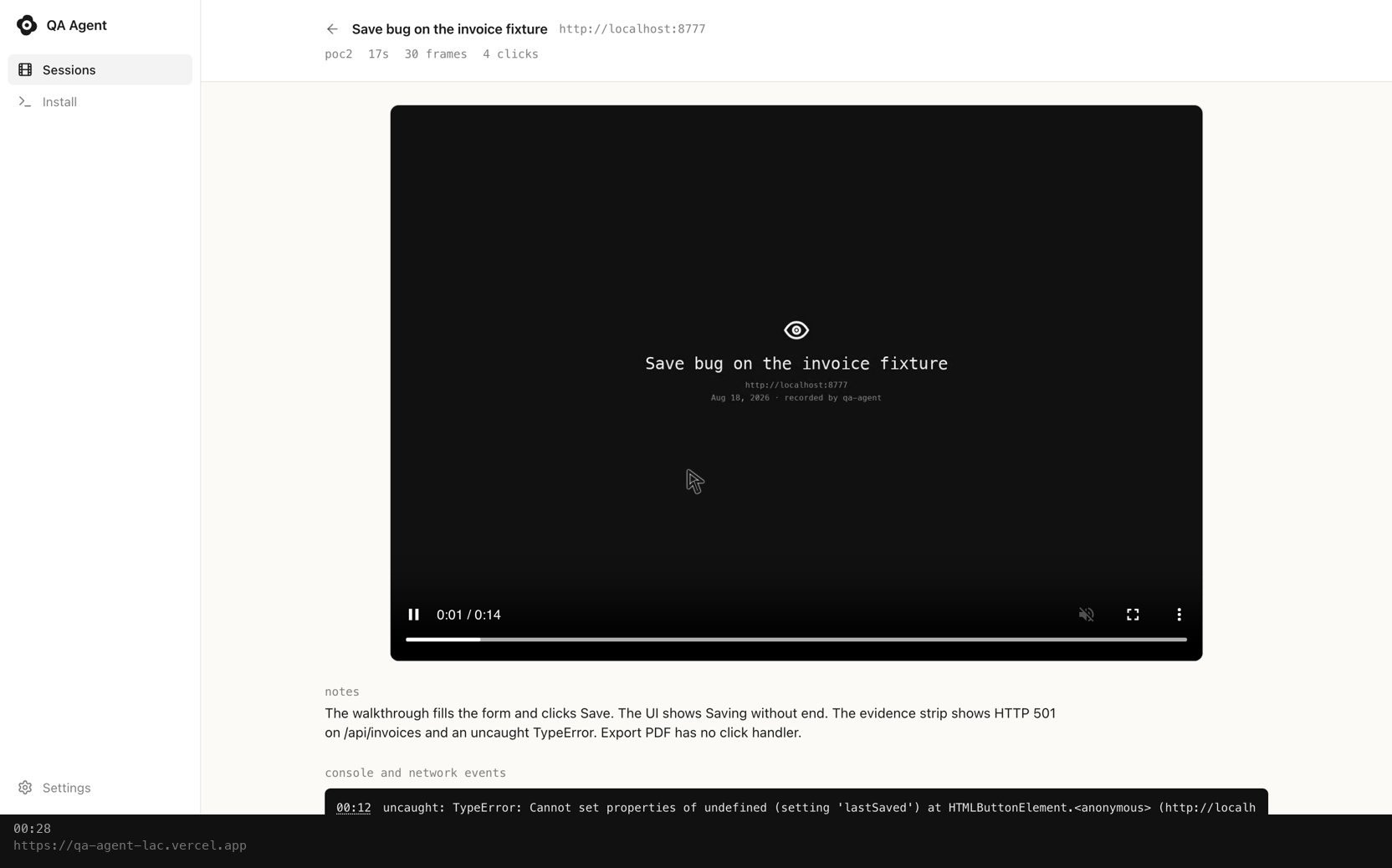
Screenshots with the error log
$ qa shot app.example --json
shot.png  2880x1686@2x  38 KB  1104 ms
  ! console.error: Failed to load resource: 404 (favicon.ico)
  ! http_error: 500 /api/preferences
One command takes a native-2x screenshot: the viewport, the full page, or one element. The console errors and failed requests from the load come with it.
Security defaults
- Yours to publish. A recording stays private until you share it.
- Key labels only. Passwords do not enter the recording as text.
- Filmed from outside. The agent starts the recorder and cannot change what it recorded.
- Scoped to the target. The recorder opens the app you point it at, and nothing else.
- Configurable. Origin allowlist, side-effect grants, recorder settings.
“Coding agents ship more changes than anyone has time to review. A short film of each change is a faster, more human way to digest agentic coding sessions.”
Interested?
We're onboarding a small pool of early users to orient the next iteration. Recording and rendering are free while we learn. Hosted sessions, shareable links, and publishing will be part of a paid plan.
Get early accessFAQ
Does it work with my coding agent?
Claude Code first. Codex CLI, Cursor, pi, and any agent that runs shell commands can use the CLI.
Can the agent fake the video?
The harness records through its own connection to the browser, outside the agent. The film, the input track, console, and network events are one record the agent cannot edit.
What ships with the film?
A session timeline with every input and its element, console and network events, the response payloads behind failures, action subtitles, and a plain-text summary the next agent can read.
Does it reach my production data?
The recorder is read-mostly by default. The agent submits nothing that creates, changes, or deletes server data unless you grant it.
Where do recordings live?
With your account, private by default. Publishing to a pull request or a shared link is a separate, explicit step.
What about QA sessions and motion videos?
The same recorder runs autonomous QA sessions and renders marketing videos. Both are behind a flag while v1 stays small.
Questline builds tools for agents
Agents are a new kind of user. They read text, run commands, and check their own work. We believe new software has to be built to equip them.
We'd love to hear what you think of the recorder, our first tool for them.
Raphael
